March 26, 2026
Downsizing to a Retirement Property in Surrey: Your Complete Guide (2026)
Downsizing to a retirement property is one of the most significant decisions you will make. It is rarely just about square footage. It is about reclaiming time, releasing equity, simplifying daily life, and choosing where and how you want to live the next chapter. For many people in Surrey, the decision has been building for years. The family home starts to feel too large, the garden too demanding, and the stairs a growing concern.
The good news is that Surrey offers one of the richest selections of retirement property in the South East, from well-connected towns like Weybridge, Epsom, and Esher to quieter villages across the Surrey Hills. The challenge is navigating the market confidently, understanding what you are actually buying, and avoiding the financial surprises that catch too many buyers off guard.
This guide covers everything you need to know before making your move, including:
- Why Surrey is a strong choice for retirement living
- The different types of retirement property available
- The real costs to budget for, including service charges and exit fees
- Key questions to ask before you commit
- How to manage the emotional and financial side of downsizing
Why Surrey Works So Well for Retirement Living
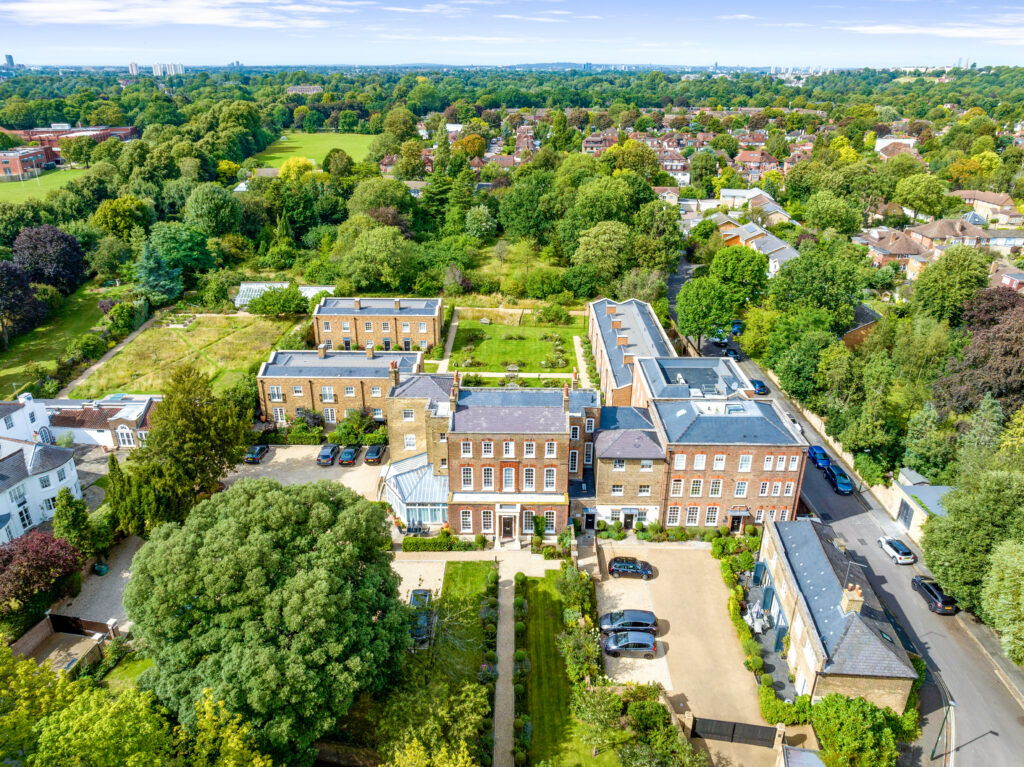
Surrey consistently ranks among the most desirable counties for retirement relocation in the South East, and the reasons go well beyond its reputation for greenery and good schools. For those downsizing from a family home, the county offers something genuinely valuable: a combination of excellent transport links, world-class healthcare access, and a well-established retirement property market with over 300 properties across 170 dedicated developments.
Connectivity Without the City
Surrey sits within easy reach of London without the noise, pace, or expense of city living. With many of the local towns offering fast rail connections into London Waterloo, making it straightforward to stay close to family or visit the capital without committing to living there. For those who want to step back from city life entirely, villages across the Surrey Hills provide genuine tranquillity while remaining well-served by local amenities.
Healthcare and Amenities
Proximity to good healthcare is one of the most important practical considerations when choosing a retirement location. Surrey is served by several major NHS trusts, including the Royal Surrey County Hospital in Guildford and Epsom and St Peters Hospital in Chertsey, as well as a strong network of GP surgeries and specialist services across the county.
A Mature Retirement Property Market
Surrey has one of the most developed retirement property markets outside London. A mature market brings the advantage of greater choice across price points and development types.
For buyers coming from a large family home, this depth of choice means it is genuinely possible to find a property that fits your lifestyle, your budget, and your long-term needs, rather than compromising on all three.
Types of Retirement Property in Surrey: What Are Your Options?
Not all retirement properties are the same, and understanding the differences before you start viewing will save considerable time and prevent mismatched expectations. The retirement property market broadly divides into three categories.
Retirement Apartments (Leasehold)
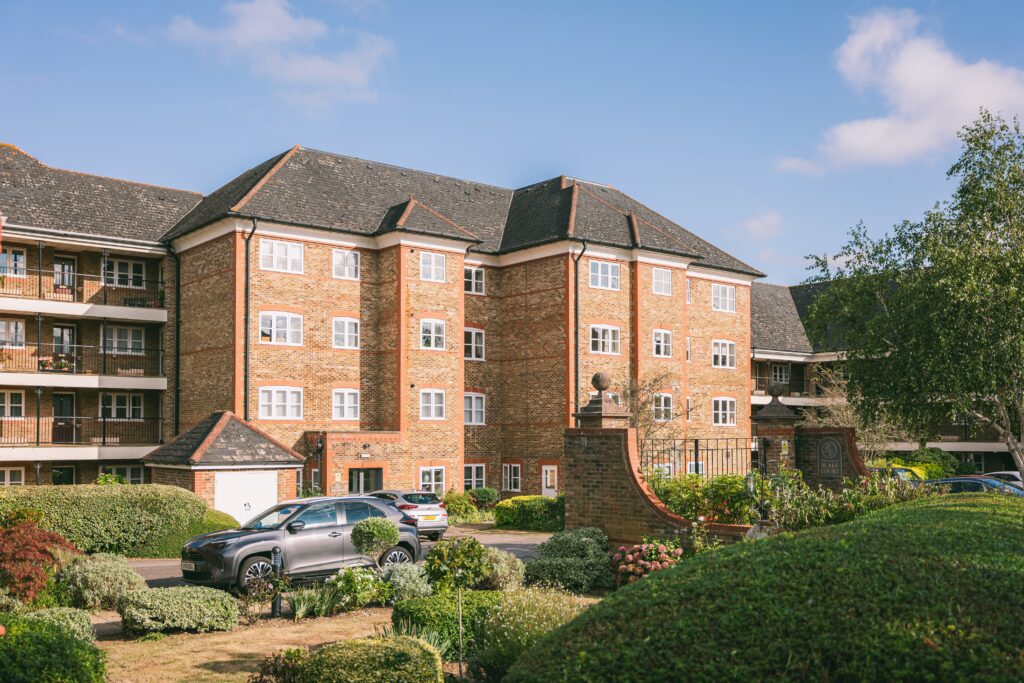
The most common option in Surrey. These are purpose-built apartments within a managed development, typically with a minimum age requirement of 55 or 60. They are almost always sold on a leasehold basis,
Most developments include:
- An on-site house manager or scheme manager
- Communal lounges, and sometimes a guest suite
- 24-hour emergency call systems
- Landscaped communal gardens maintained by the management company
These properties are ideal for buyers who want a low-maintenance lifestyle with a built-in sense of community, and who are comfortable with the leasehold structure and its associated costs.
Retirement Villages

These developments are larger and usually include more amenities. Retirement villages typically offer a wider range of on-site facilities, which can include restaurants, leisure facilities, health and wellbeing services, and sometimes care provision. Surrey has several established retirement villages, particularly in the commuter belt towns and the Mole Valley area. Audley Retirement Village sites in Cobham and Engelfield Green and are examples of these.
The trade-off is cost: both the purchase price and the ongoing service charges tend to be higher than standard retirement apartments, reflecting the broader range of services provided. It’s also worth noting that retirement villages quite often charge a significantly higher exit fee upon resale, typically ranging from 10–30% of the sale price, which is an important consideration when weighing up the long-term financial commitment.
Bungalows and Age-Restricted Homes
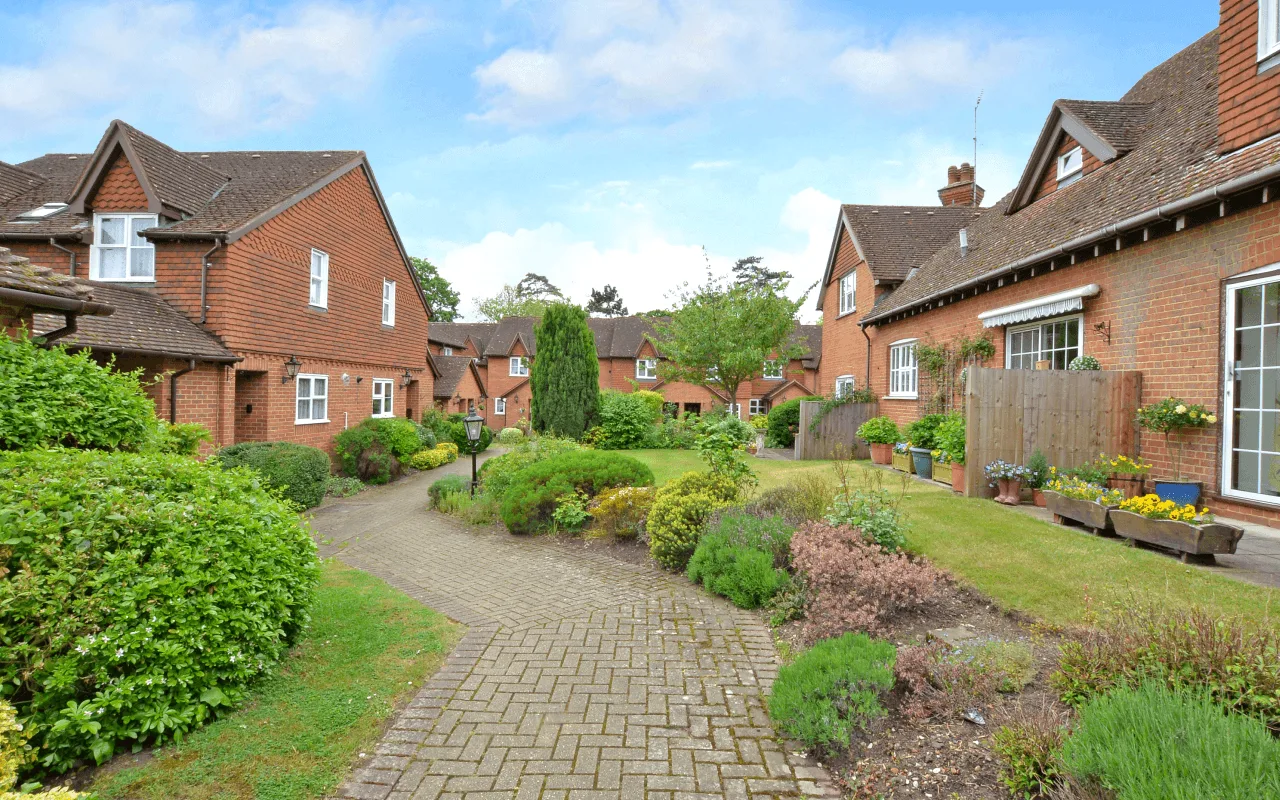
Some buyers prefer a house or bungalow rather than an apartment. Age-restricted houses and bungalow developments do exist in Surrey, though they are less common than apartment schemes. These offer more independence and, in many cases, a small private garden, while still being part of a managed community, quite often with communal facilities and services.
Bungalows and Houses in Retirement Developments in Surrey and Surrey Borders
Epsom, Surrey
Oakmead Green, Epsom — 49 Bungalows and Apartments
Village Gardens, Epsom — 28 Bungalows
Hookfield Mews, Epsom — 10 Houses and Bungalows
Derby Close, Epsom — 25 Bungalows and Apartments
Ewell, Surrey
Lakeside, Ewell — 35 Houses
Sunninghill / Ascot — Borders of Surrey in Berkshire
Meridian Court, Ascot — 29 Bungalows
Lynwood Village, Ascot — 18 Cottages
Mytchett, Surrey
Mytchett Heath, Mytchett — 42 Houses and Apartments
Chertsey, Surrey
Onslow Mews, Chertsey — 29 Houses and Apartments
Windlesham, Surrey Borders
Fromow Gardens, Windlesham — 33 Houses and Apartments
Hersham, Surrey
Coach House Mews, Hersham — 15 Houses
Weybridge, Surrey
Aspen Square, Weybridge — 24 Houses
Leatherhead, Surrey
The Farthings, Leatherhead — 35 Houses and Apartments
Cobham, Surrey
White Lion Place, Cobham — 30 Houses and Apartments
Frimley — Coming Soon
49 Bungalows and Chalet Bungalows (Coming Soon) — Email us to join the waiting list for further information on this site.
Understanding the Real Costs: What to Budget For
The purchase price of a retirement flat is only the starting point. The ongoing and exit costs associated with leasehold retirement property can vary widely between developments. It is important to understand these costs clearly before you buy.
Service Charges
Every retirement property comes with a service charge, payable monthly, quarterly, or sometimes biannually. This covers the upkeep of communal areas, building maintenance, buildings insurance, the scheme manager’s salary, and utilities for shared spaces.
The national average service charge for a retirement property is approximately £524 per month, according to data from the homeownership advisory sector. However, charges at the lower end of the market can sit around £200 per month, while premium retirement villages in Surrey can exceed £1,000 per month.
Key things to check before buying:
- What exactly does the service charge cover? Ask for a full breakdown.
- What was the charge three years ago, and how much has it increased annually?
- Is there a sinking fund (also called a reserve fund) for major future works such as roof repairs or lift replacement?
- Are service charges payable even if the property is unoccupied? (In most cases, yes.)
The client’s addition reads as additional explanatory content rather than just feedback, they’re adding important context about why these fees exist, which is genuinely useful for the reader. Here’s the rewrite:
Exit Fees and Deferred Charges Exit fees, sometimes called deferred management charges or contingency fees, are payable when you sell the property. They are one of the most misunderstood costs in the retirement property market.
Exit fees typically range from 1% to 2% of the resale price, though some premium developments charge significantly more. At the higher end of the market, some schemes charge deferred fees of up to 35% of the sale price, making them a very significant financial consideration.
It’s important to understand what these charges represent. Developments with higher exit or deferred sale fees often have them in place of larger monthly service charges, which are typically fixed for an extended period to give homeowners greater certainty over their ongoing costs. It’s also common for these charges to cover major future works rather than drawing from a traditional sinking fund. So while the fee can look significant on paper, the overall financial picture needs to be considered in full before drawing conclusions.
Ground Rent
Good news here: for retirement properties purchased since April 2023, ground rent has been abolished under the Leasehold Reform (Ground Rent) Act 2022. If you are buying a resale property that predates this legislation, check what ground rent is currently payable and whether it is subject to review clauses.
The majority of resale retirement properties still have ground rent written into their leases, and the charges vary considerably, from as little as £50 per year up to nearly £1,000 per year in some cases. Ground rent reform is a live political issue, with ongoing discussion around capping charges on existing leases, but nothing has been legislated yet. Until that changes, it remains an important cost to scrutinise before proceeding with any purchase.
Stamp Duty and Legal Costs
If you are buying a retirement property as your main residence and you are not a first-time buyer, standard Stamp Duty Land Tax rates apply. Conveyancing costs for leasehold properties are typically higher than for freehold purchases, as your solicitor must review the lease, liaise with the managing agent, and obtain service charge accounts. Budget for conveyancing costs of £1,500 to £3,000 for a leasehold retirement flat.
A Quick-Reference Cost Summary
| Cost | Typical Range | Notes |
| Service charge | £200 – £1,000+/month | Varies by development and location |
| Exit / deferred fee | 1% – 35% of sale price | Check the lease carefully |
| Ground rent | £0 (post-April 2023) | May apply on older resale properties |
| Conveyancing | £1,500 – £3,000 | Higher than standard freehold purchase |
| Stamp Duty | Standard SDLT rates | Based on purchase price |
10 Questions to Ask Before You Buy a Retirement Property in Surrey
Most buyers ask about the purchase price and the service charge. The buyers who avoid problems ask much more. Before committing to any retirement property, work through this checklist.
- What is the current service charge, and what has it been for the last three years? Rising charges are normal; sharp or unexplained increases are a warning sign.
- Is there a sinking fund, and what is the current balance? A healthy reserve fund means you are less likely to face a sudden demand for a large one-off contribution.
- What is the exit fee, and how is it calculated? Get this confirmed in writing and have your solicitor review the exact lease wording.
- What is the length of the remaining lease? Factor in the cost of a lease extension if needed.
- What are the age restrictions? Minimum ages vary between developments, typically 55, 60, or 70. This matters if a partner is younger or if a family member might need to move in.
- Are pets permitted? Many retirement leases restrict or prohibit pets. Check before you fall in love with a property.
- Is subletting allowed? If you ever need to move into care temporarily or permanently, can you rent the property out? Some leases prohibit this entirely.
- Who manages the development, and what is their track record? Ask to speak with current residents if possible. They will give you a candid picture of management quality.
- How quickly do properties in this development typically sell? Service charges can sometimes continue while a property is on the market. If resale times are slow, that cost accumulates so always find out if this is the case.
- What is the development’s guest policy? If family visiting overnight matters to you, check whether a guest suite is available and what the booking arrangements are.
Specialist advice matters here. A solicitor with specific experience in leasehold retirement property will identify issues in the lease that a general conveyancer might miss. This is not the transaction to use the cheapest quote you find.
The Financial Upside: Releasing Equity and Simplifying Your Finances
The costs above are real and important to understand. However, downsizing can also create significant financial benefits, because for most people downsizing from a Surrey family home, the financial picture is strongly positive.
Releasing Equity
Surrey property values have risen substantially over the past two decades. Many homeowners in the county are sitting on significant equity in properties they no longer fully use. Downsizing to a retirement apartment typically releases a meaningful capital sum, which can be used to:
- Supplement pension income
- Fund care costs if needed in future
- Support children or grandchildren with deposits or education costs
- Simply provide financial security and peace of mind
The size of that release depends on the gap between your current property value and the purchase price of your retirement flat. In many cases, buyers in Surrey are moving from a family home worth £700,000 or more into a retirement apartment priced between £250,000 and £450,000, freeing up a substantial sum.
Reduced Running Costs
A retirement flat eliminates many of the costs that accumulate with a large family home:
- No garden maintenance costs
- No exterior painting or roof repairs to fund personally
- Significantly lower utility bills from a smaller, well-insulated property
- Buildings insurance included within the service charge
The service charge replaces a collection of individual maintenance costs. Whether it represents good value depends entirely on the development and the quality of management, which is why doing your due diligence on the management company matters as much as the property itself.
No Capital Gains Tax on Your Main Residence
Selling your family home to downsize does not trigger Capital Gains Tax, provided it has been your primary residence. This is a significant advantage that makes the financial arithmetic of downsizing considerably more attractive than it might appear at first glance.
The Emotional Side of Downsizing: What Nobody Tells You
The practical and financial side of downsizing gets plenty of coverage. The emotional side gets far less attention, despite being the part that most people find hardest.
Leaving a family home is not simply a property transaction. It is a transition that often involves letting go of a space where children grew up, where decades of memories were made, and where a particular version of your life was lived. It’s a big change, and many people underestimate how emotional the process can be.
A few things that help:
Start the process earlier than you think you need to. The people who find downsizing most stressful are those who begin sorting through belongings and making decisions under time pressure. Starting the decluttering process months before you intend to move gives you space to make considered choices rather than hasty ones.
Involve family in the right way. Adult children often have strong feelings about the family home, and those feelings deserve space in the conversation. At the same time, the decision about where and how you live in retirement is yours to make. Being clear about that boundary early prevents difficult dynamics later.
Visit developments more than once, at different times of day. A development that feels welcoming on a sunny Tuesday morning may feel very different on a wet Thursday afternoon. The community and atmosphere of a retirement development matter enormously to long-term happiness there.
Think about the future as well as the present. The property that suits you perfectly today should also work reasonably well if your mobility or health needs change. Single-storey living, a lift in the building, step-free access, and proximity to healthcare are all worth weighting more heavily than buyers sometimes do at the outset.
Think about the future as well as the present. The property that suits you perfectly today should also work reasonably well if your mobility or health needs change. Single-storey living, a lift in the building, step-free access, and proximity to healthcare are all worth weighting more heavily than buyers sometimes do at the outset.
It can also be worth enlisting specialist support to help with the downsizing process itself. Rice + Roman is partnered with The Homemover Specialist, a company dedicated to making the practical and emotional side of moving home that little bit easier.
The best downsizing decisions are made when people give themselves enough time to think clearly, rather than being pushed by circumstances into a rushed move. If you have the option to plan ahead, use it.
How Rice + Roman Can Help
Rice + Roman is a specialist retirement estate agency focused exclusively on retirement properties. Unlike general estate agents who occasionally handle retirement flats alongside family homes, we work within this market every day, across more than 300 properties and 170 developments in Surrey, Greater London, and Berkshire.
That focus makes a practical difference. We understand the leasehold structures, the service charge histories, the management companies, and the resale dynamics of specific developments. When you are buying, that knowledge helps you make a more informed decision. When you are selling, it means your property is presented to a buyer pool who are specifically looking for retirement property, not stumbling across it by accident.
Whether you are at the very beginning of thinking about a move, or ready to start viewing, we are happy to talk through your options without any obligation. The retirement property market in Surrey has real depth, and finding the right fit takes a different kind of search than the general property market.
To explore what is currently available across Surrey’s retirement developments, contact the Rice + Roman team or browse our current listings.
Guides
May 1, 2026
Guides
Property Search
March 31, 2026
Guides
March 26, 2026