May 1, 2026
Understanding the Support Options in Retirement Housing
“Retirement property” isn’t one thing. It’s a spectrum, and where someone sits on that spectrum today isn’t necessarily where they’ll need to be in five years.
The good news is that the market has evolved significantly. There are now genuinely excellent options at every level of support, from completely independent apartments in managed communities right through to properties with round-the-clock care on site. Understanding the differences makes the whole search far less overwhelming.
Here’s a clear breakdown of what’s available, and what to look for.
Completely Independent Living Retirement Development
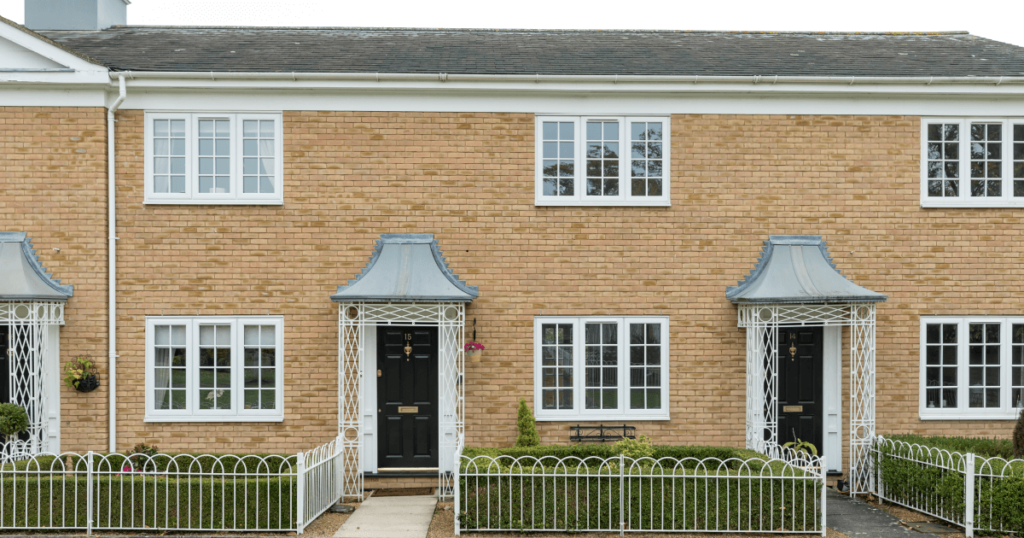
These are self-contained apartments, or occasionally houses, within age-restricted developments, typically for residents aged 55, 60 and over. Residents live entirely independently. There is no care provision built in, and none expected.
What you do get is security, community, and the removal of maintenance burden. Most developments have a visiting Manager, communal gardens, and shared social spaces. The building is maintained, the grounds are kept, and life can simply be enjoyed.
This is the right option for someone who is independent, but wants the reassurance of a managed environment and the company of like-minded neighbours.
Independent living retirement properties:
- Aspen Square, Weybridge
- Orford Court, Ham
- Claremont Place, Claygate
- Coach House Mews, Hersham
- Cobham Grange, Cobham
- Hinchley Manor, Hinchley Wood
Independent Living With Limited Onsite Support
A step up from the above, these developments offer the same independently-owned or leasehold apartment model, but with a more substantial staffed presence.
Rather than a visiting Manager, these developments typically have some sort of daily management available throughout the day Monday to Friday, and in some cases into the evening. The majority also benefit from a 24 Hour Emergency Response system.
For many, this level strikes the ideal balance of genuine independence with a meaningful safety net built quietly into the background.
Rice + Roman retirement properties with limited onsite support:
Extra Care / Assisted Living
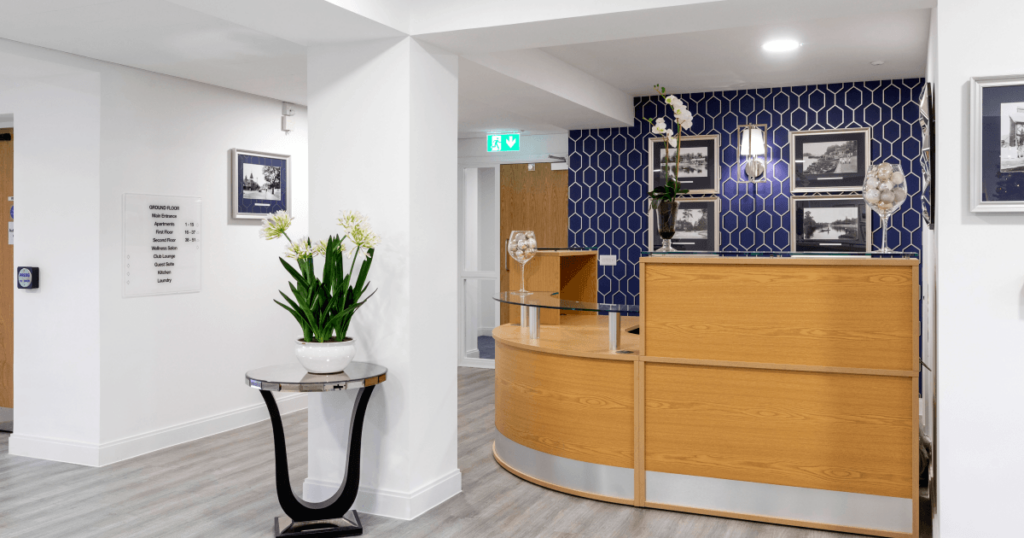
Extra care properties, sometimes called assisted living or enhanced sheltered housing, are designed for people who want the security of on-site support while continuing to live fully independently. Residents own or rent their own apartments and retain complete control over their daily routine and lifestyle.
Care and support are available on site, either through an in-house team or a closely aligned care provider, but it is entirely personal. Some residents use it regularly; others are simply reassured it is there if they ever need it. Many people move into extra care with no support needs at all, attracted by the on-site restaurant, the social community, and the peace of mind that comes with knowing help is available for them or their partner if circumstances change.
Support is assessed, agreed, and adjusted over time, so it can grow with a resident’s needs without them having to move. Social activity programmes are usually extensive, and GP and other health services may visit the development directly. Additionally these development typically have a small restaurant or cafe on-site, with either food and drinks served all day or as a minimum, a lunchtime offering. The norm in these site is on-site Managment 7 days a week and quite often 24/7, however this varies from site to site.
This is independent living with a safety net, not a care setting. The front door is yours. The routine is yours. The support fits around your life, on your terms.
Retirement developments with assisted living:
- Edwards Place, Walton
- Elles House, Wallington
- Barnes Wallis Court, Weybridge
- Birch Place, Crowthorne
- Fullerton Court, Teddington
- Austin Place, Weybridge
- Keble Court, Fleet
Integrated Retirement Communities (IRCs)
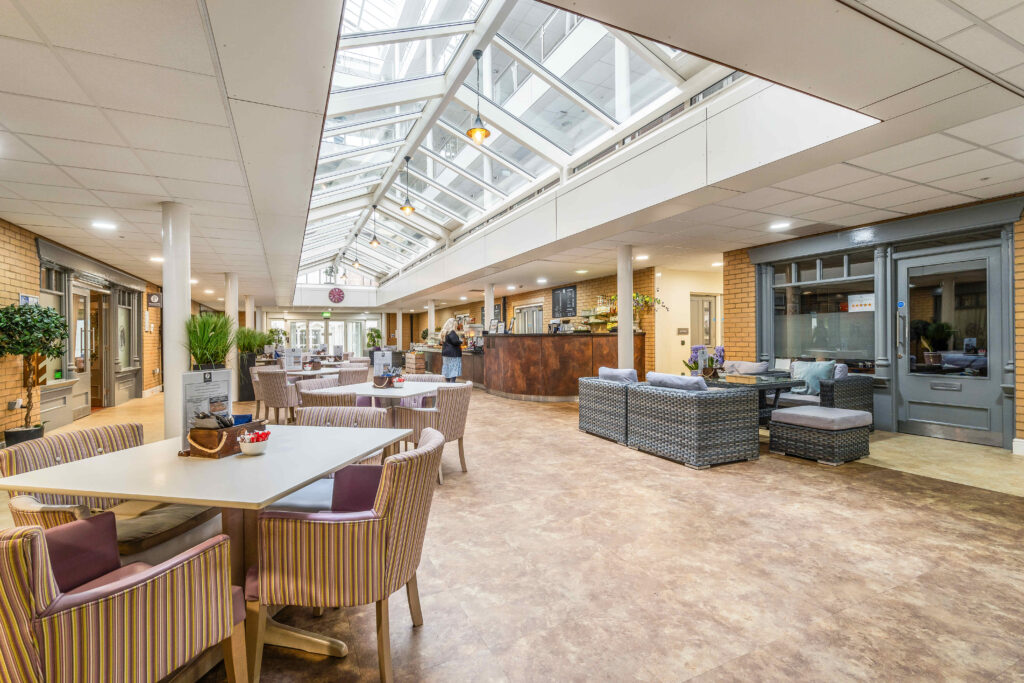
Some of the larger, more established developments take a different approach: combining independent living apartments with a fully registered care home on the same site or within the same estate.
An Integrated Retirement Community (IRC) is a housing model for older people that combines independent living in private homes with on-site care, social amenities, and hospitality services. IRCs enable residents to live in their own homes while offering optional flexible care and support, promoting independence within a secure community setting.
The practical benefit is significant. Residents can buy an independent apartment knowing that, if needs increase substantially in the future, the transition into the care home doesn’t mean leaving the community, the friendships, or the area they’ve settled into. For couples where one partner has greater needs, it can also allow them to remain genuinely close even when living arrangements need to differ.
These are often the developments that attract the strongest long-term loyalty, because they offer a complete answer to the “what if things change?” question that sits at the back of so many people’s minds.
Rice + Roman recommended IRC developments:
Getting This Right From the Start
The most common mistake in this search is choosing a property based on current needs alone, without considering how those needs might evolve over three, five, or ten years.
Rice + Roman’s role isn’t just to find the right property. It’s to understand the full picture, your current situation, personal preferences, and budget, and match that to a development that makes sense for all of it. That kind of joined-up thinking is what distinguishes a specialist from a generalist, and it’s at the heart of everything Rice + Roman do.
If you’re struggling to know where to start with your retirement property search, the team are always happy to talk it through, no obligation, just helpful guidance from people who know this market better than anyone.
Get in touch with Rice + Roman today and let’s find the right fit.

Guides
June 10, 2026
Guides
Property Search
June 9, 2026
Guides
Property Search
March 31, 2026